
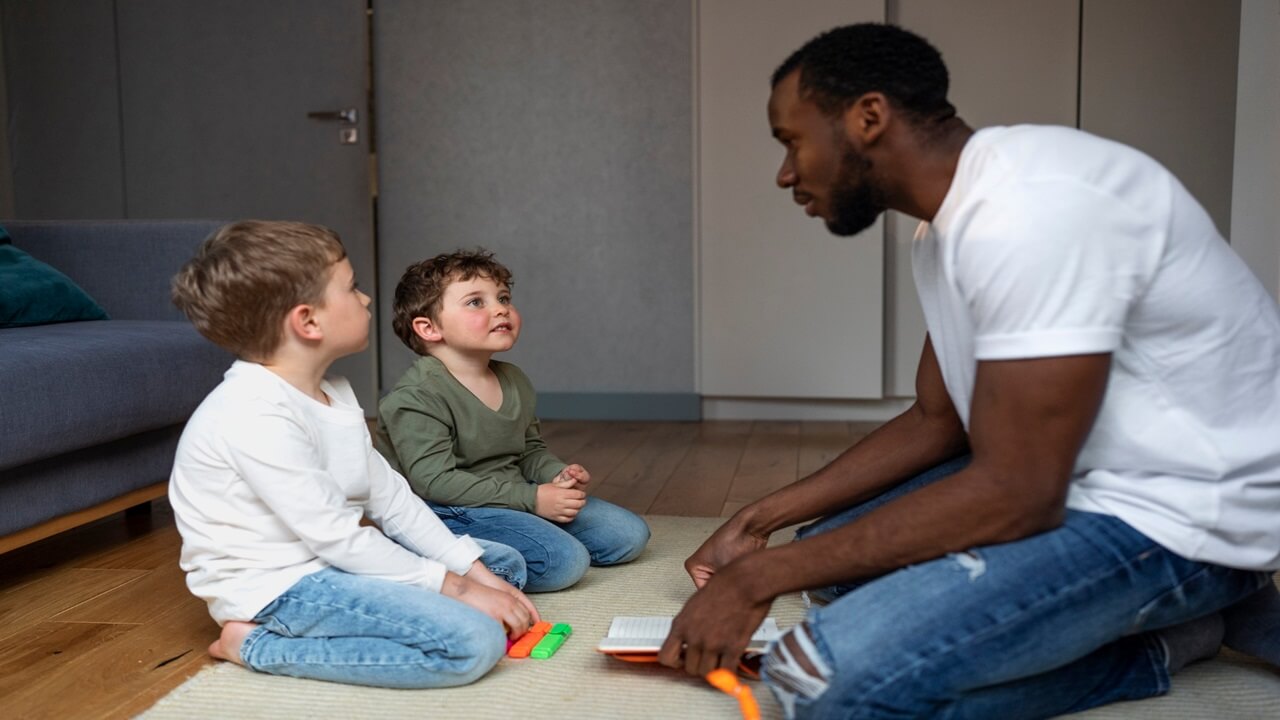
Autism Therapies for Children
Autism is a life-long condition and whilst it is important to recognise that autism is no-one’s fault and as yet there is no known cure, we do know that there are approaches that can be helpful.
From talking to professionals and other parents or by looking at the internet you may come across a number of programmes, therapies and interventions. However, it is important to remember that what works well for one individual may not necessarily work well for another. It may be advisable to discuss these, and / or others you may be aware of, with the professionals involved in the care of your child to find out which therapies / interventions are available locally and whether they think they may be of benefit.
Examining existing research and findings for families for whom it has worked are probably the best ways to evaluate how effective an approach may be. Speak to other families who have tried the approach because, even if an approach has shown spectacular results, it may not be right for your child if you do not have the time and money to implement it in the same way.
The families it has worked for may have plenty of money, large amounts of support from extended family and friends and live in an area where services are readily available. If these things don’t apply to you, then it’s possible that the approach won’t work either. Don’t despair, there is plenty you can do to help your child, even if you don’t plan on remortgaging your house or taking a loan to pay for therapies!
AUTISM SPECTRUM DISORDER THERAPIES FOR CHILDREN
The following are autism spectrum disorder therapies that patients and families have used with different levels of success:
SPELL
This course is usually offered to professionals although parents can and do access it on occasion. SPELL stands for Structure, Positive (approaches and expectations), Empathy, Low arousal and Links. The SPELL framework has been developed by the National Autistic Society to understand and respond to the needs of children and adults on the autistic spectrum. The framework is also useful in identifying underlying issues in reducing the disabling effects of the condition and in providing a cornerstone for communication. It also forms the basis of all autism specific staff training and an ethical basis for intervention.
The SPELL framework recognizes the individual and unique needs of each child and adult and emphasizes that planning and intervention be organized on this basis. A number of interlinking themes are known to be of benefit to children and adults on the autism spectrum and by building on strengths and reducing the disabling effects of the condition progress can be made in personal growth and development, the promotion of opportunity and as full a life as possible.
TEACCH
TEACCH stands for the Treatment and Education of Autistic and Communication-Handicapped Children. The long-term goals of the TEACCH approach are both skill development and fulfilment of fundamental human need. ‘Structured Teaching’ was developed to achieve these goals.

The key elements of Structured Teaching include:
- Developing an individualized person- and family-centered plan for each client or student, rather than using a standard curriculum.
- Structuring the physical environment.
- Using visual supports to make the sequence of daily activities predictable and understandable.
- Using visual supports to make individual tasks understandable.
Cognitive Behavioural Therapy (CBT)
Cognitive Behavioural Therapy is based on the idea that how we think, how we feel, and how we act, affect each other. CBT uses techniques to help people become more aware of how they reason, so that they can change how they think and therefore how they behave.

CBT is likely to work only for those individuals who have both the capacity and the preference for monitoring and managing their own behaviour. It is therefore more likely to work for high-functioning individuals with autism or Aspergers syndrome who are more than 8 years old.
Early Intensive Behavioural Intervention
Early Intensive Behavioural Intervention is a highly structured and intense intervention in which a child is taught a range of skills by a team of therapists. The therapists break down the skills into small tasks that are considered to be achievable and which are taught in a very structured manner.
Desired behaviour, such as use of language or socialization, is positively reinforced and accompanied by lots of praise. Negative behaviour, such as self-harm or aggression towards others, is not reinforced. For example, a child who hurts himself in order to gain attention would be prevented from hurting himself and the therapists might stop talking to the child until he showed a more desirable behaviour.

Music Therapy
Music therapy uses live music making and composition techniques to encourage children, adolescents and adults with autism spectrum disorders to engage in spontaneous and creative musical activities. The therapist and client use a variety of percussion or tuned instruments, or voice, to develop shared and interactive musical activities.

The individual with autism does not need musical skills to benefit from music therapy but the music therapist does need a high level of musical and therapeutic skill. Supporters of music therapy believe that it can be used to develop social engagement, joint attention, communication abilities, while also addressing emotional needs and quality of life.
Social Groups
Social groups provide an opportunity for individuals with autism to meet each other and to improve their social skills in a safe, supportive environment. The groups are usually facilitated by professionals or volunteers but offer flexibility in the leisure activities they provide. For example, some may focus on one activity, such as drama, whilst others may offer a wider range of activities.

Social groups differ from social skills groups in that they are less focused on the attainment of skills and more focused on providing opportunities for people to participate in mainstream leisure activities.
Social Skills Groups
Social skills groups provide an opportunity for individuals with autism to practice and improve their social skills in a safe, supportive environment. Some groups include people with and without autism, although some groups consist only of people with autism. The groups are usually facilitated by professionals. Social skills groups differ from social groups in that they are more focused on the attainment of skills and are therefore likely to be more structured.

Developmental, Individual-difference, Relationship-based (DIR)
The emphasis of this approach, developed by Greenspan and Weider (1999), is about following and imitating the child’s actions, using sensorimotor techniques such as swinging the child or applying physical pressure if this increases attention to the adult. Adults also present problem-solving activities to the children, and playfully obstruct any repetitive routines and attempt to elicit communication by not responding to non-communicative actions.




Share This Article: